Monday, January 7, 2008

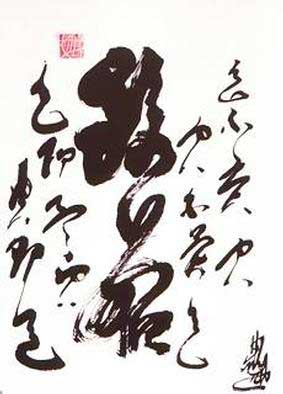
we can only hold with empty hands


It is interesting, I think, to consider the depth at which the idea of interconnectivity goes. Now, one could find small superficial examples, of course - such as, I have shoes because someone made them - but it is the subtle levels that I think I enjoy considering most.

The idea that light and darkness are connected is something I consider regularly as I meditate; I should explain:

There can be no darkness without without light and there can be no light without darkness; the fuel each other. If there were no light, there would be only darkness, and as such we would have no need to call it "darkness" it would just be. In turn, if there were no darkness, we would have no need to call anything "light" because to say something is "light" implies that something else could be "dark" - light would just be as well.

This is my favorite concept of emptiness as well. "Light" must be let go of in order to understand this. We cannot conceive of such a thing as "light" if "darkness" does not exist. So, if we forget about "darkness" and we see light as simply there, and not as "light", then we can perhaps get a glimpse in true emptiness, and maybe even an understanding of what is meant by, "only empty hands can hold" - how are they connected? You tell me.

Wednesday, January 2, 2008

Dependent Origination


The idea of dependent origination is something I love. Knowing that all things are dependent on a set of circumstances preceding it is a wonderful way of looking at the world.

Many people, however, reject the idea of dependent origination even though, each one of us is a shining example of it. If it were not for a specific set of circumstances, none of us would be here. If our parents hadn't been born, fell in love, had sex, we could not exist, thus we are all originated dependent upon other actions. We simply cannot exist of our own accord.

When we walk around in our day to day lives, we see a tree, a flower, a cup, and our mind tells us that these things exist of their own accord. It simply is not the case. The tree cannot exist with out seed, which cannot, germinate without water, so the tree is entirely dependent on rain.

This concept of dependent origination, is another way of saying interdependence and leads to, hopefully, some form of understanding of the concept of emptiness as well as the the true nature of the world.

Monday, December 31, 2007


It seems to me today as I sit here - putting off doing what needs to be so as to sit in a public library and annoy people with insistent key strokes, when they want nothing more than to not be annoyed by the aforementioned - that what we so desire in this world is right in front of our faces, all the time, just sitting there waiting for us to take hold of it.

But what is it that we desire? I doubt very much that it is "stuff" that plagues our minds, nor do I think it is money or fame; we want these, but only because we see them as tools to get what we really want.

We want happiness. It is all that we want. Sure, we crave good food, nice cars, expensive clothes, and big houses, but in the end, we crave these things because we think they will make us happy - that somehow these things have the power to do what we, ourselves, cannot.

The truth of the matter though, I think, is that our happiness lingers, ever present, right in front of our little faces if only we will take the time to look at it. Happiness is not found in a five thousand dollar watch, in a Mercedes Benz, or on the internet, rather, it is located in our kids faces, a flower, a snow flake, and ultimately within ourselves, either aided or bridled by our own attitudes.

Some would look at my small little apartment - ever a mess - and say, "what a miserable life you must lead!", but that same person, in their big house, with their fancy car, cannot sleep at night; cannot see the wonder in the life around them; cannot enjoy the presence of their own spouse for all the nonsense on their mind; and knowing that, which of us is indeed unhappy?

So, I wonder, if we admitted that "Stuff" will not bring us happiness and we were able to admit that "stuff" is only a means to an end, could we then break free of this cycle of consume, exploit, waste, take, consume, exploit, waste, take...?

Imagine if we were able to find our own bliss within life's bliss; imagine if we could even notice life's bliss in the first place. Would there be a need for money, fame, oil, diamonds, gold, etc..? Or, if we found delight in a flower, in bird, in the things in this world that are truly amazing, would there be war, hatred, and all their ilk?

Who knows? But to me, it is a wonderful notion, de facto

Saturday, December 29, 2007

the unexplainable


As one reads the ideas of Zen, I think, one is generally left with a kind of stupid look on their face. The sayings; the seemingly paradoxical non-logic that is so abundant in Zen; seem to offer nothing more to the reader than anything but a stupid look.

But therein lies the genius of Zen. It is in that profound stupid look that we realize the simple nature of these paradoxes and what they are trying to tell us. When a great master, in response to the question "what is Zen?", holds up a finger, kicks a ball, or slaps the face asking the question, our initial reactions complete bafflement, but when enlightenment comes, the satori, we are again left with that stupid look asking ourself, "is it really that simple?"

Simple indeed.

What is zen?

Exactly!

Just a thought

hese are my meditive thoughts for today. Perhaps they will be of some sort of use to someone....

There has never been any good gained from the acknowledgement of impure thoughts, so I am done acknowledging them. This does not mean I will never have another impure thought, but rather that I will not allow those thoughts to control my actions.

There has never been any good gained from speaking bad about someone, so I am done speaking bad about people. This means I will not point out the flaws of anyone, unless I can do it to their face.

There has never been any good gained from angerly confronting someone - or anger in general - so I am done confronting people when I can see that I am angry. This does not mean I will allow people to walk all over and take advantage of me, but that I will not confront someone until I have calmed myself and can speak to them with respect and compassion.

There has never been any good gained from dwelling over the unchangable, so I am done dwelling over things I cannot change. This does not mean I will ignore them, but only that I will not dwell on them when it isn't advantageous to do so.

These are my meditive reflections and realizations.

life IS that simple

It seem to me, that after all the deep thought and complex ideas of Buddhism - the intricate workings of Karma, the depth of emptiness, etc.. - that what we are searching for is something very, very, simple.

We spend hours meditating on how to "let go" and we ponder the complex web of interdependency and while I think it is important to do so, I think from time to time it is good to step back, stop trying to be so philosophical, and just accept the ideas for what they are.

After all, if you believe in Karma and you see the need to be a good person, then just be a good person. What happens if you are a bad person is irrelevant if you are not doing that.

If you see the importance of patience, kindness, and tolerance, then simply practice them. How do we practice these? By being patient, kind, and tolerant. It really is that simple.

The complexities that we work our selves up about; the idea that, "I need to learn to be patient (or kind or tolerant, et cetera...) is just silly. You know how to be patient. You exhibit it all the time - consider when you are not in a hurry and you have to wait at a stop light; you have infinite patience then. So you already know how to be patient, you just need to do it all the time.

At the same time, you already know that things like anger and hate are bad, and you already have the ability to tell when you are getting mad, so just don't allow yourself to. When you feel it happening, remind your self, "Anger is bad. It leads to harsh words. Harsh words hurt people.Hurting people is wrong and I will eventually feel the effects myself."

I think if we keep these simplicities in mind, we will be better, happier people in the end. That is my hope.

Peace

Thoughts on kindness


he practicing of kindness on a day to day basis, while it shouldn't be, is something that is a bit foreign to some people. Most do not stop to think of the impact one act of kindness can have on another person.

To many, kindness is something that is only done to return a favor or done for people close to themselves; seldom do people think of how being kind to a complete stranger can affect that stranger and much more seldom do people realize how that act of kindness can affect their own psyche.

I, however, have come to the belief that kindness towards a stranger, in a completely random way and though no provocation, might just have the most impact.

You see, too often we are obliged to do something nice - as stated before: returning a favor, on a birthday, etc... - but far too seldom are those acts genuine. However, if we engage in acts of kindness without cause, then we are doing so of our own accord, our own good intentions, and in effort to make someone happy, if only for a brief moment.

I think the impact of this "kindness without cause" goes much deeper than people realize. If we can put a smile on someones face, that feeling of happiness, that feeling that someone went out of their way just for them, might stick with them all day. Therefore, the more random acts of kindness we find ourselves doing, the more happy people we will find ourselves living around.

And that cannot be a bad thing.
free hit counters